
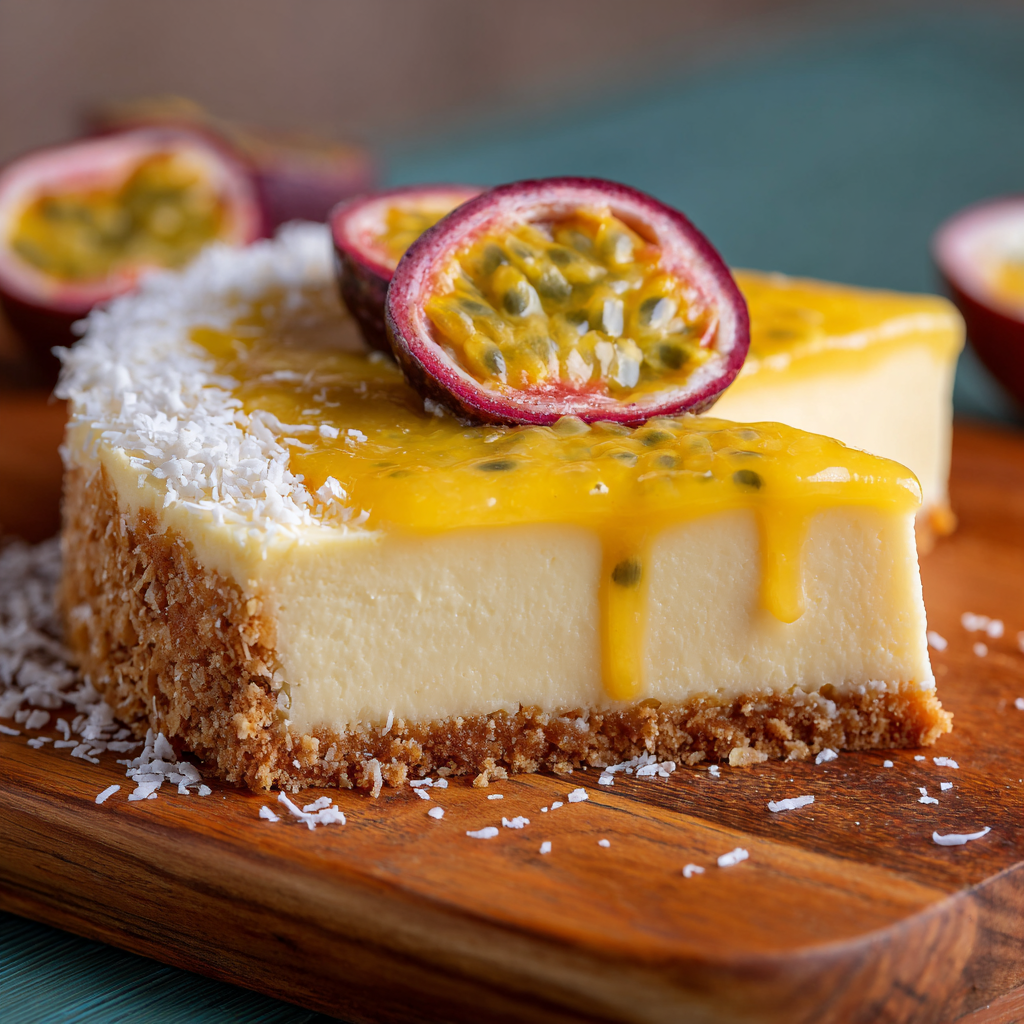
If you’re looking for a dessert that perfectly balances creamy richness with a bright, tropical tang, the Passionfruit Cheesecake with Coconut Crust is an absolute must-try. This delightful cheesecake combines a luscious, velvety filling infused with the exotic flavor of passionfruit, resting on a crunchy, lightly toasted coconut crust that adds just the right amount of texture and sweetness. It’s a celebration of vibrant flavors and inviting textures in every bite, making it a standout dessert for any occasion.

Ingredients You’ll Need
With just a handful of simple, thoughtfully chosen ingredients, you can create this heavenly Passionfruit Cheesecake with Coconut Crust. Each one plays a crucial role—whether adding creaminess, tang, crunch, or that unmistakable tropical aroma.
- Coconut flakes: Lightly toasted to bring out their natural sweetness and provide a crunchy, fragrant crust base.
- Butter: Melted and mixed with the coconut flakes to bind the crust together, adding richness.
- Cream cheese: The star of the filling, bringing that smooth, creamy texture essential for cheesecake perfection.
- Granulated sugar: To balance the tartness of the passionfruit and sweeten the filling just right.
- Eggs: Gently incorporated to give the cheesecake its structure and luscious consistency.
- Passionfruit pulp: Fresh or frozen, the key ingredient that imparts the signature tangy, tropical flavor.
- Sour cream or heavy cream: To add a subtle tang and keep the filling luxuriously moist.
- Vanilla extract: A touch of warmth and depth that rounds out the flavors beautifully.
How to Make Passionfruit Cheesecake with Coconut Crust
Step 1: Prepare the Coconut Crust
Start by gently toasting your coconut flakes in a dry pan over medium heat until they turn golden brown and release a tempting aroma. This light toasting enhances their flavor and gives the crust a satisfying crunch. Then, combine the toasted coconut with melted butter and a little sugar, mixing until everything is evenly coated. Press this mixture firmly into your springform pan to create an even, compact base that will hold up beneath the creamy filling.
Step 2: Make the Creamy Passionfruit Filling
In a large bowl, beat softened cream cheese with sugar until smooth and fluffy to build that signature cheesecake texture. Beat in eggs one at a time, ensuring each is fully incorporated before adding the next. Add the sour cream or heavy cream for extra creaminess, followed by the vanilla extract for warmth. Finally, fold in the passionfruit pulp carefully, preserving its bright flavor and slightly seedy texture. This filling should be rich, velvety, and bursting with tropical notes.
Step 3: Bake the Cheesecake
Pour the filling over the prepared coconut crust and smooth the top with a spatula. Bake at a moderate temperature until the edges are set and the center is just slightly jiggly—this ensures the perfect creamy consistency once cooled. To prevent cracking, you can bake the cheesecake in a water bath or simply place a pan of water on a lower rack to keep the oven moist. When done, let the cheesecake cool to room temperature before chilling it thoroughly in the fridge, preferably overnight.
Step 4: Chill and Set
Allow the cheesecake to chill for at least 6 hours, though overnight is ideal. This resting time lets the flavors meld beautifully and the texture firm up just right, so every bite cuts cleanly yet remains soft and silky on the tongue.
How to Serve Passionfruit Cheesecake with Coconut Crust
Garnishes
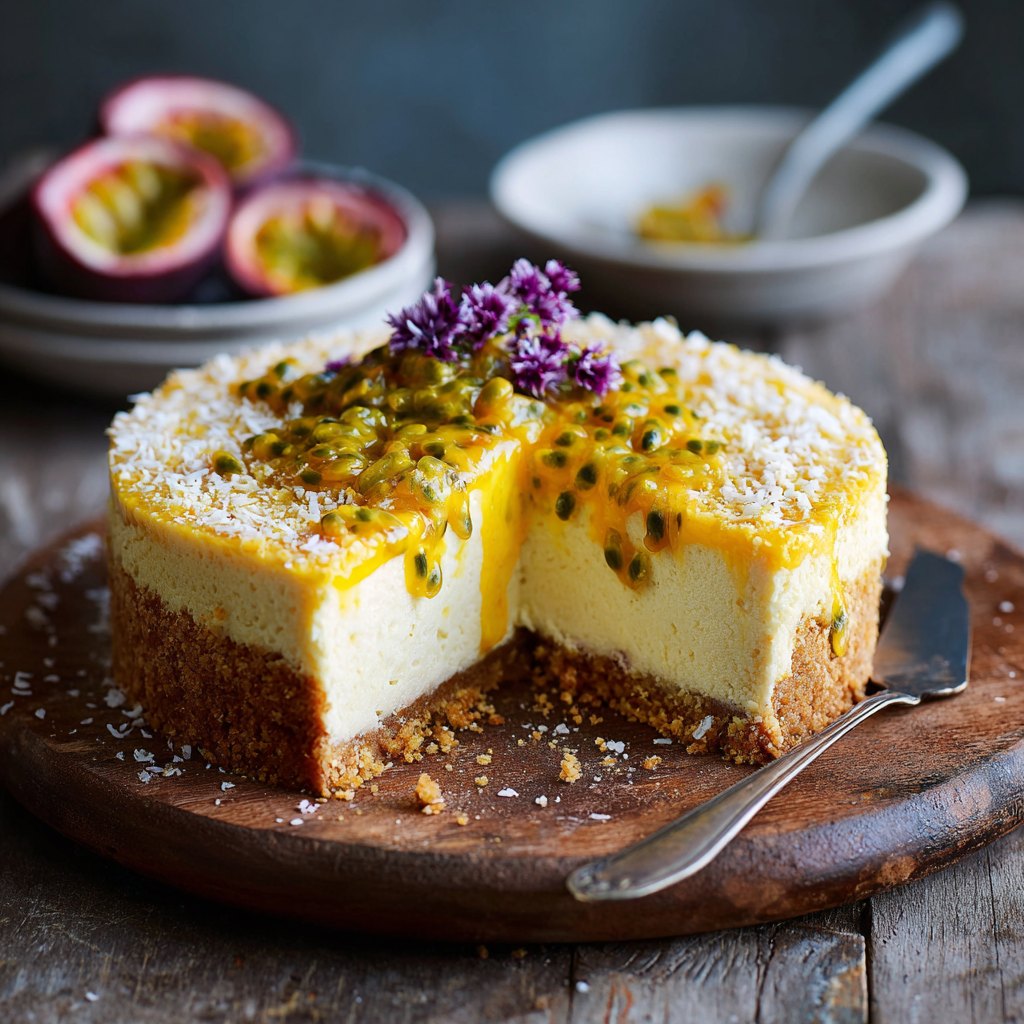
When it’s time to serve your Passionfruit Cheesecake with Coconut Crust, presentation counts. Fresh passionfruit seeds scattered on top add visual appeal and bursts of tartness. Coconut flakes toasted to a golden hue make a lovely, crunchy topping, while a few sprigs of fresh mint can brighten the plate with color and aroma.
Side Dishes
This cheesecake pairs wonderfully with lightly sweetened whipped cream to complement the tangy passionfruit flavor. Alternatively, a scoop of tropical sorbet—such as mango or pineapple—can make for a refreshing contrast. Fresh berries or a drizzle of passionfruit coulis can also be offered as delightful sides that enhance the overall tropical experience.
Creative Ways to Present
For something extra special, serve slices of the Passionfruit Cheesecake with Coconut Crust on individual dessert plates garnished with edible flowers or a dusting of powdered sugar. For a casual gathering, consider making mini cheesecakes in ramekins or cupcake liners, perfect for sharing and stunning to look at.
Make Ahead and Storage
Storing Leftovers
Leftover Passionfruit Cheesecake with Coconut Crust should be stored covered tightly in the refrigerator to maintain freshness and prevent the crust from becoming soggy. It will keep well for up to 4 days, giving you plenty of time to savor each slice.
Freezing
If you want to prepare in advance or save some for later, this cheesecake freezes beautifully. Wrap it securely in plastic wrap and then in aluminum foil or an airtight container to protect it from freezer burn. It can be frozen for up to 2 months without sacrificing flavor or texture.
Reheating
Cheesecake is best enjoyed chilled, so it’s not typically reheated. However, if you prefer, allow frozen cheesecake to thaw overnight in the refrigerator before serving. This ensures the flavors and texture remain just as delicious as freshly made.
FAQs
Can I use canned passionfruit pulp for the cheesecake?
Absolutely! Canned passionfruit pulp works wonderfully in this recipe, especially when fresh passionfruit is out of season. Just make sure to check it doesn’t have added sugars or preservatives that could affect the flavor.
Is it possible to make the crust nut-free?
Yes, the coconut crust itself doesn’t contain nuts, making it a great nut-free option. Just ensure your toasted coconut flakes are processed in a nut-free facility if allergies are a concern.
Can I substitute the cream cheese with a dairy-free alternative?
Definitely! For a dairy-free version of Passionfruit Cheesecake with Coconut Crust, use a plant-based cream cheese substitute. The texture and flavor will be slightly different but still deliciously satisfying.
Why does my cheesecake crack on top?
Cracks usually form from overbaking or sudden temperature changes. Baking the cheesecake gently, avoiding overmixing, and allowing it to cool slowly can help prevent cracks. Using a water bath also helps maintain even baking.
Can I make mini Passionfruit Cheesecakes with Coconut Crust instead of a large one?
Yes! Simply divide the crust and filling into muffin tins or small ramekins lined with parchment or silicone molds. Adjust the baking time accordingly—mini cheesecakes typically bake faster, so start checking around 20 minutes.
Final Thoughts
The Passionfruit Cheesecake with Coconut Crust is a tropical dream come true, combining creamy, tangy, and crunchy elements that will transport your taste buds to sunny shores. Whether you’re making it for a special celebration or just because you deserve a little indulgence, this recipe promises to be a showstopper. Give it a try, and get ready to fall in love with every luscious bite.
Your email address will not be published. Required fields are marked *