
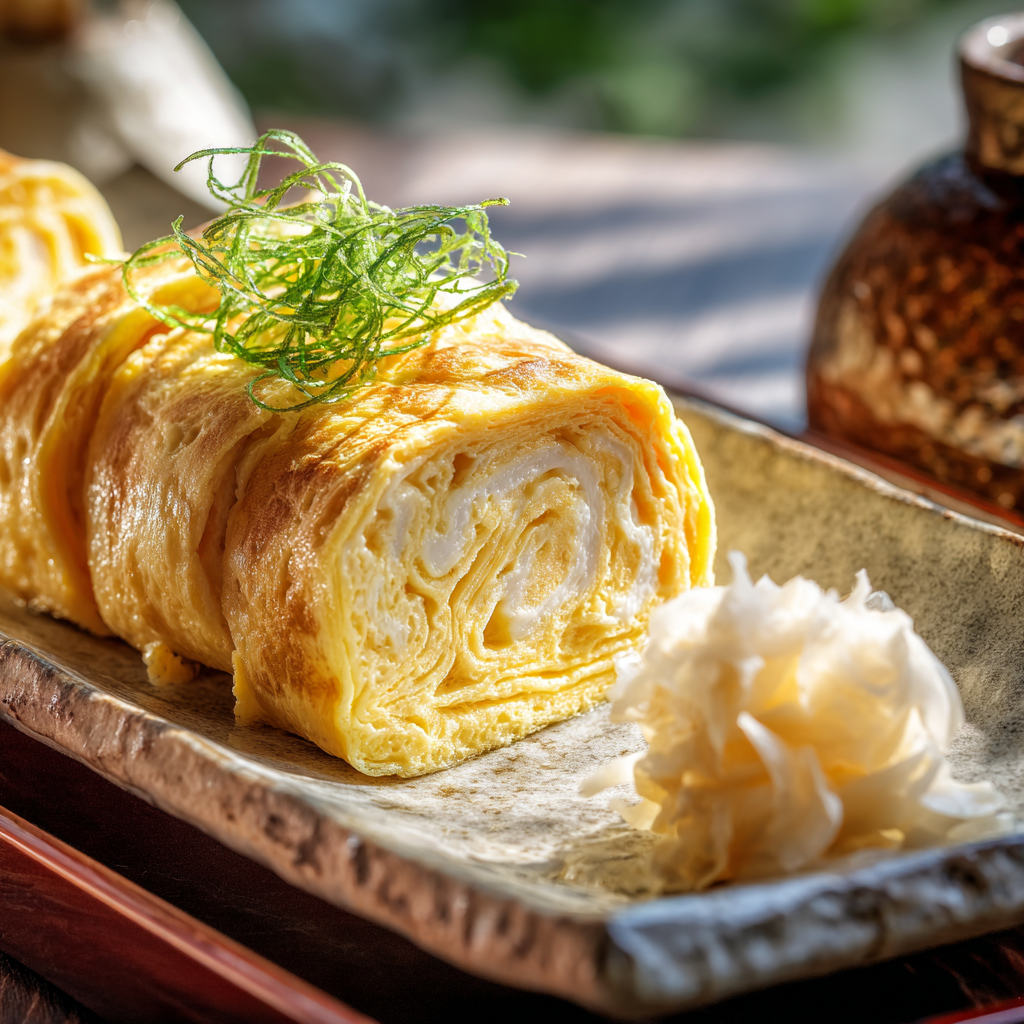
If you love eggs and are eager to explore a delightful new twist, Dashimaki Tamago (Japanese Rolled Omelette) is an absolute must-try. This tender, slightly sweet, and savory rolled omelette bursts with umami from dashi, soy sauce, and mirin, creating an irresistible dish that effortlessly elevates any meal. Whether you’re enjoying it fresh for breakfast, packing it for lunch, or serving it as an elegant side dish, Dashimaki Tamago offers a perfect harmony of flavor and texture that feels like a warm hug on a plate.

Ingredients You’ll Need
The magic behind this Dashimaki Tamago (Japanese Rolled Omelette) lies in a handful of simple yet essential ingredients. Each component plays a vital role in balancing sweetness, savoriness, and that subtle dashi flavor, delivering a truly authentic taste and delightfully smooth texture.
- Eggs (4 large): The foundation for your omelette, providing a rich and creamy base.
- Dashi stock (1/4 cup): A key ingredient that adds a gentle umami depth, keeping the omelette light and flavorful.
- Soy sauce (1 teaspoon): Adds a touch of savory saltiness that complements the dashi perfectly.
- Mirin (1 tablespoon): Sweet rice wine that brings a subtle sweetness and gloss to the omelette.
- Sugar (1 teaspoon): Balances the savory flavors with a gentle sweetness for that classic taste.
- Vegetable oil (for cooking): Essential to prevent sticking and ensure a smoothly cooked surface.
How to Make Dashimaki Tamago (Japanese Rolled Omelette)
Step 1: Prepare the Egg Mixture
Start by gently whisking your eggs in a bowl, being careful not to overbeat — you want them just combined for a tender omelette. Next, add the dashi stock, soy sauce, mirin, and sugar. Whisk again until everything is thoroughly mixed and slightly frothy; this will help give your Dashimaki Tamago that delicate and fluffy texture.
Step 2: Heat the Pan and Oil
Heat a rectangular tamagoyaki pan or a small non-stick skillet over medium-low heat, then lightly oil the surface using a paper towel dipped in vegetable oil. The right amount of oil allows the egg to cook evenly and roll smoothly, so don’t skip this step!
Step 3: Pour the First Layer and Roll
Pour a thin layer of the egg mixture into the pan, tilting to cover the bottom evenly. Once it starts to set but remains slightly soft on top, use chopsticks or a spatula to gently roll the egg into a log shape on one side of the pan.
Step 4: Add More Egg and Continue Rolling
Brush or oil the pan lightly again, then pour another thin layer of the egg mixture, lifting the rolled egg so the new layer flows underneath. As this layer firms up, roll the omelette again, starting from the rolled side. Repeat this layering and rolling process until all the egg mixture is used, forming a thick, beautifully layered rolled omelette.
Step 5: Shape and Cool
Once cooked, press the rolled omelette gently with the spatula or a sushi mat if you have one, shaping it into a neat, rectangular block. Let it rest for a few minutes to set and cool slightly; this makes slicing cleaner and easier.
How to Serve Dashimaki Tamago (Japanese Rolled Omelette)
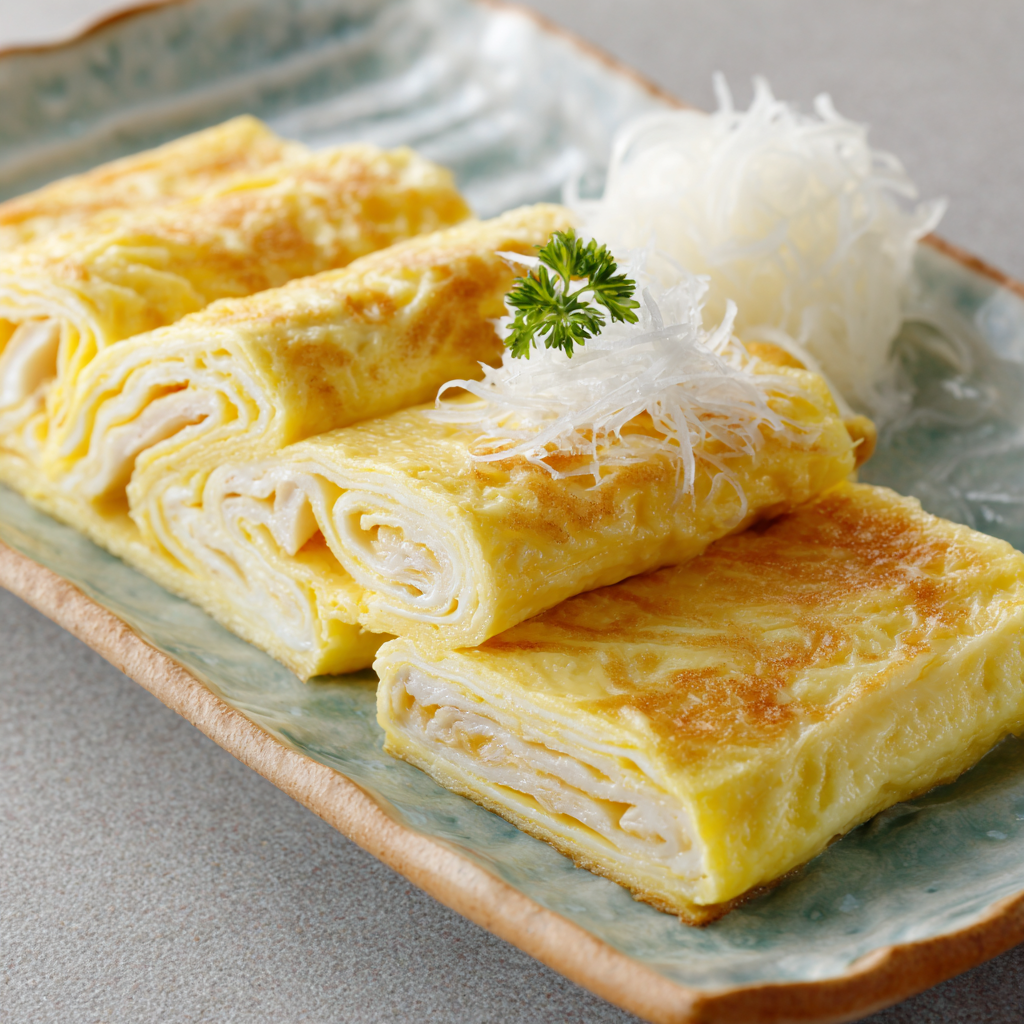
Garnishes
Dashimaki Tamago shines with simple garnishes like freshly grated daikon mixed with a touch of soy sauce or a few sprigs of finely chopped green onion. These add a fresh contrast and visually brighten the dish without overpowering the umami notes.
Side Dishes
Serving Dashimaki Tamago alongside steamed rice and miso soup is a classic combination that makes for a comforting and nourishing Japanese breakfast. It also pairs deliciously with pickled vegetables or lightly seasoned spinach for a balanced meal.
Creative Ways to Present
For a fun twist, slice the Dashimaki Tamago into bite-sized pieces and arrange them on skewers with cherry tomatoes and cucumber slices for an elegant appetizer. You can also layer slices in bento boxes between rice balls and seasonal veggies for a vibrant lunch.
Make Ahead and Storage
Storing Leftovers
Store any leftover Dashimaki Tamago in an airtight container in the refrigerator for up to two days. Make sure to let it cool down before sealing to maintain its soft texture and prevent condensation from making it soggy.
Freezing
While freezing is not typically recommended for this delicate omelette due to texture changes, you can freeze small pieces wrapped tightly in plastic wrap for up to one month. Thaw gently in the refrigerator before reheating.
Reheating
Reheat gently by microwaving with a damp paper towel over the slices to keep moisture in, heating in 15-second intervals until warm. Avoid high heat to prevent drying out your Dashimaki Tamago.
FAQs
What is the difference between Dashimaki Tamago and regular Japanese Tamago?
Dashimaki Tamago uses dashi stock in the egg mixture, giving it a lighter texture and rich umami flavor, while regular tamago relies mainly on sugar and soy sauce for sweetness and seasoning without the dashi.
Can I make Dashimaki Tamago without a special pan?
Absolutely! Although a rectangular tamagoyaki pan makes the rolling easier and more authentic, a small non-stick skillet works just fine. It just requires a bit more practice to roll evenly.
Is Dashimaki Tamago gluten-free?
It depends on the soy sauce used. Traditional soy sauce contains gluten, but you can substitute with gluten-free tamari to make a gluten-free version of Dashimaki Tamago without sacrificing flavor.
How do I make the omelette less sweet?
Simply reduce the sugar and mirin slightly according to your taste. You can adjust gradually, keeping the balance with the savory and umami flavors to suit your preference.
Can I add fillings like vegetables or cheese?
While traditional Dashimaki Tamago doesn’t usually include fillings, you can experiment with finely chopped herbs or cooked vegetables for texture, or a mild cheese for a fusion twist—just keep portions small to maintain the delicate layers.
Final Thoughts
There is something truly special about making and savoring Dashimaki Tamago (Japanese Rolled Omelette) at home. Its balance of sweet, savory, and umami notes makes every bite a delightful experience that’s both comforting and elegant. Once you try this recipe, it’s sure to become a beloved staple in your kitchen that brightens breakfasts and lunches alike. So why wait? Grab your eggs and dive into the delicious world of Dashimaki Tamago today!
Your email address will not be published. Required fields are marked *